
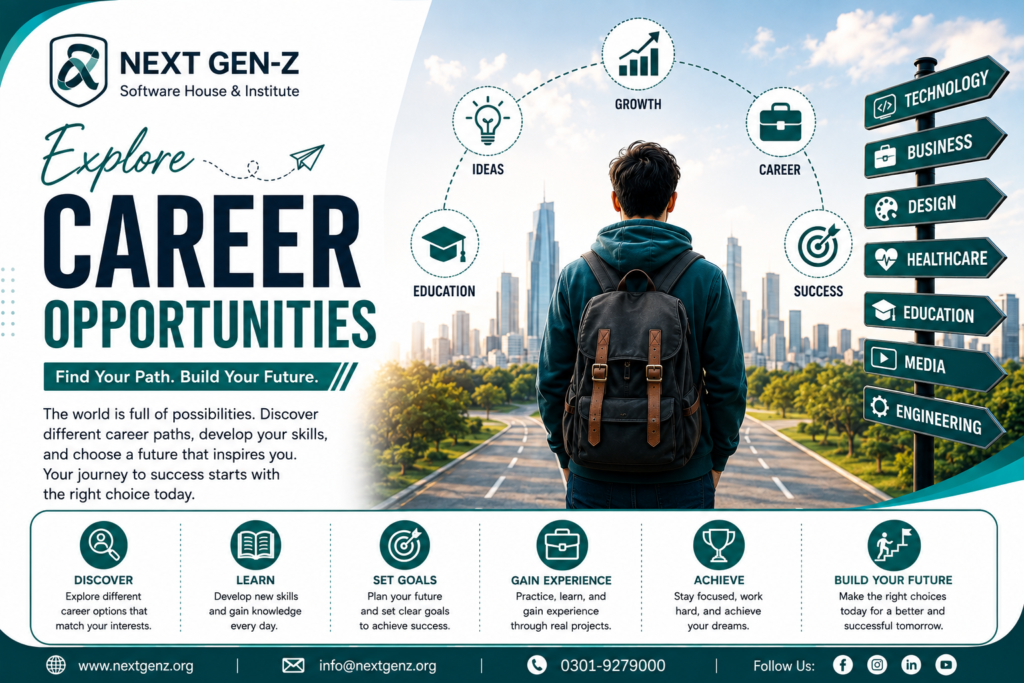
Explore Your Career Opportunities
Choosing the right career is an important step toward a successful future. Explore different fields, identify your interests, develop valuable skills, and make informed decisions that match your goals and abilities.
Find your passion, build your skills, and create your future.
Career Opportunities: Explore Your Future and Build a Successful Career
Choosing the right career is one of the most important decisions in a person’s life. A career is not only about earning money; it is also about developing skills, discovering your interests, gaining experience, and building a meaningful future. Today, students and young professionals have access to many different career opportunities because technology, education, business, and digital industries are growing rapidly.
In the past, people often followed a limited number of traditional career paths. Today, the situation is different. Students can explore careers in technology, education, design, marketing, business, healthcare, finance, communication, and many other fields. Online learning and digital platforms have also made it easier to learn new skills and prepare for different professional opportunities.
What Are Career Opportunities?
Career opportunities are different options available to a person for education, employment, professional growth, and skill development. These opportunities can include jobs, internships, freelance work, business, entrepreneurship, apprenticeships, and professional training.
A good career opportunity should match a person’s skills, interests, education, and long-term goals. For example, someone who enjoys technology may explore software development, web development, cybersecurity, or data-related careers. Someone interested in creativity may choose graphic design, fashion design, content creation, or digital marketing.
Career opportunities can change over time as industries develop and new technologies appear. Therefore, learning new skills and staying updated can help people adapt to the changing job market.
Why Are Career Opportunities Important?
Career opportunities are important because they help individuals plan their professional future. Having a clear understanding of available careers can make it easier to choose the right educational path and develop useful skills.
1. Helps You Choose the Right Career
Exploring different career opportunities allows students to understand what different professions involve. Instead of choosing a career without enough information, students can compare different fields and identify the one that suits their interests.
2. Develops Professional Skills
Career development encourages people to learn practical and professional skills. Communication, teamwork, problem-solving, computer skills, creativity, and time management are useful in many professions.
3. Creates Financial Independence
A suitable career can provide opportunities to earn an income and become financially independent. Developing valuable skills can increase a person’s chances of finding employment or creating their own source of income.
4. Provides Professional Growth
A career is not limited to the first job someone gets. People can gain experience, take additional training, accept new responsibilities, and move toward higher-level positions.
5. Builds Confidence
Learning new skills and gaining professional experience can improve confidence. Completing projects, participating in internships, and working with others can help individuals become more comfortable in professional environments.
Popular Career Paths in Today’s World
The modern job market offers opportunities in many different industries. Some fields are especially popular because of technological development and changing business needs.
1. Information Technology
Information Technology is one of the largest and fastest-changing career fields. Organizations use technology for communication, data management, online services, security, and business operations.
Career options in IT include:
- IT Support Specialist
- Systems Administrator
- Network Administrator
- IT Consultant
- Database Administrator
- Technology Project Coordinator
- Cloud Support Professional
People interested in technology can begin by learning basic computer skills and gradually move toward specialized areas.
2. Web Development
Web development focuses on creating and maintaining websites and web applications. Businesses, educational institutions, organizations, and individuals all need websites to communicate with their audiences.
Web development generally includes:
- HTML
- CSS
- JavaScript
- Front-end development
- Back-end development
- Database management
- Website maintenance
A person interested in this field can start with basic HTML and CSS and then progress toward JavaScript and other web technologies.
3. Software Development
Software developers create applications and programs that help users perform different tasks. Software can be developed for computers, mobile devices, businesses, educational platforms, and many other purposes.
Common skills include programming, problem-solving, logical thinking, testing, and understanding software development processes.
Possible career roles include:
- Software Developer
- Application Developer
- Mobile App Developer
- Software Tester
- Junior Programmer
- Full-Stack Developer
4. Artificial Intelligence and Data
Artificial Intelligence and data-related careers have become increasingly important as organizations use technology to analyze information and automate tasks.
Career areas include:
- Data Analysis
- Machine Learning
- Artificial Intelligence
- Data Engineering
- Business Intelligence
- Research and Development
Students interested in this area can develop their knowledge of mathematics, statistics, programming, and data analysis.
5. Graphic Designing
Graphic design is a creative career that combines visual communication with technology. Graphic designers create visual materials for websites, social media, advertisements, brands, presentations, and businesses.
Graphic designers may work on:
- Logos
- Posters
- Social media graphics
- Brochures
- Presentations
- Website graphics
- Marketing materials
Creativity, design principles, typography, color understanding, and design software skills are important in this field.
6. Fashion Designing
Fashion designing offers opportunities for people interested in clothing, creativity, textiles, and trends. Fashion professionals can work with clothing brands, design studios, retail companies, or start their own businesses.
Career options include:
- Fashion Designer
- Textile Designer
- Fashion Illustrator
- Fashion Stylist
- Costume Designer
- Fashion Merchandiser
- Fashion Entrepreneur
Building a portfolio is particularly useful for creative careers because it allows employers and clients to see a person’s actual work.
7. Digital Marketing
Digital marketing has become an important part of modern business. Companies use digital platforms to promote products, communicate with customers, and build their online presence.
Career opportunities include:
- SEO Specialist
- Social Media Manager
- Content Marketer
- Email Marketing Specialist
- Digital Marketing Executive
- Search Marketing Professional
Useful skills include communication, content creation, search engine optimization, analytics, and social media management.
8. Content Writing
Content writing is another flexible career opportunity. Writers create articles, website content, product descriptions, social media posts, educational materials, and other forms of written communication.
A content writer should develop:
- Strong writing skills
- Grammar
- Research skills
- Creativity
- Editing skills
- Communication skills
- Basic SEO knowledge
Content writers may work for organizations, agencies, websites, or as independent freelancers.
9. Education and Teaching
Education remains an important career field. Teachers and educational professionals help students develop knowledge and skills.
Career opportunities include:
- School Teacher
- College Instructor
- Online Tutor
- Academic Coordinator
- Educational Content Creator
- Trainer
The growth of online education has also created opportunities for people to teach through digital platforms.
10. Business and Entrepreneurship
Entrepreneurship allows individuals to create and manage their own businesses. A business can start with a small idea and gradually grow through planning, customer service, marketing, and effective management.
Entrepreneurs may create businesses in areas such as:
- E-commerce
- Fashion
- Technology
- Education
- Food
- Digital services
- Creative services
Entrepreneurship requires planning, communication, financial awareness, creativity, and the ability to solve problems.
Freelancing as Occupation Outlook
Freelancing has become an attractive option for people who have useful digital or professional skills. Freelancers provide services to clients on a project or contract basis.
Popular freelance skills include:
- Graphic Design
- Web Development
- Content Writing
- Video Editing
- Digital Marketing
- Translation
- Virtual Assistance
- Data Entry
Freelancing can help beginners gain practical experience and build a professional portfolio. However, successful freelancing requires patience, quality work, communication, time management, and professionalism.
Benefits of Freelancing
Freelancing can offer several advantages:
- Flexible working arrangements
- Opportunity to work with different clients
- Ability to build a portfolio
- Development of professional skills
- Exposure to international projects
- Opportunity to work independently
It is important for beginners to focus on developing real skills rather than expecting immediate success.
Remote Work Opportunities
Remote work allows professionals to perform their responsibilities outside a traditional office environment. Many roles can be performed remotely, especially in digital industries.
Examples include:
- Software Development
- Web Development
- Graphic Design
- Content Writing
- Digital Marketing
- Customer Support
- Virtual Assistance
- Online Teaching
Remote work requires self-discipline, communication, organization, and reliable access to the necessary technology.
Skills That Can Improve Professional Possibilities
Education is important, but employers often look for a combination of education and practical skills. Developing the right skills can improve career prospects.
Communication Skills
Good communication helps professionals explain ideas, understand instructions, work with colleagues, and communicate with customers.
Problem-Solving Skills
Employers value people who can analyze problems and find practical solutions.
Computer Skills
Basic computer knowledge is useful in almost every modern workplace. Advanced digital skills can create even more opportunities.
Time Management
Managing time effectively helps professionals complete tasks and meet deadlines.
Teamwork
Many professional environments require people to work with teams. Cooperation and respect for others are important workplace qualities.
Creativity
Creativity can help professionals develop new ideas, improve existing processes, and solve problems in different ways.
Adaptability
Industries can change quickly. People who are willing to learn and adapt can remain prepared for new opportunities.
How Students Can Prepare for Their Careers
Students can begin preparing for their future careers before completing their education. Small steps can create valuable experience over time.
1. Identify Your Interests
Think about the subjects and activities you enjoy. Your interests can provide clues about careers that may suit you.
2. Learn Practical Skills
Choose skills that are useful in your preferred field. Online courses, workshops, tutorials, and practice projects can help.
3. Create a Portfolio
A portfolio is a collection of your best work. It can be especially useful for fields such as graphic design, web development, writing, fashion design, photography, and video editing.
4. Gain Experience
Internships, volunteer projects, student activities, and personal projects can provide practical experience.
5. Improve Your Communication
Practice writing, speaking, presentations, and professional communication. These skills are valuable in almost every career.
6. Keep Learning
Career development does not stop after completing a degree. Professionals should continue learning new tools, technologies, and methods.
The Role of Technology in Career Development
Technology has changed the way people learn, work, and search for career opportunities. Students can now access educational materials, professional communities, online courses, and career information from anywhere with an internet connection.
Digital tools can also help people create portfolios, communicate with clients, attend online classes, participate in remote internships, and apply for jobs.
Because technology continues to evolve, digital literacy is becoming increasingly important for students and professionals.
Work Growth and Professional Development
Getting a job is only the beginning of a professional journey. Career growth involves continuously improving skills and taking on new responsibilities.
A professional may begin as a trainee or junior employee and gradually move into positions with greater responsibility. Experience, education, certifications, strong performance, and professional networking can contribute to career growth.
Setting short-term and long-term goals can also help individuals stay focused.
For example:
Short-term goal: Learn a new professional skill.
Medium-term goal: Complete a project or internship.
Long-term goal: Build a professional career or start a business.
Importance of Networking
Networking means building professional relationships with people in your field. These relationships can help you learn about industries, discover opportunities, exchange ideas, and learn from experienced professionals.
Students can build professional networks through:
- Workshops
- Seminars
- Educational events
- Professional communities
- Internships
- Online professional platforms
- University activities
Networking should focus on genuine professional relationships rather than simply asking people for jobs.
Challenges in Building a Field
Career development can also have challenges. Some people may struggle with uncertainty, lack of experience, competition, or changing industry requirements.
Common challenges include:
- Choosing between different career paths
- Finding the first opportunity
- Developing enough practical experience
- Competing in the job market
- Keeping skills updated
- Managing study and work
- Building confidence
These challenges can be handled through planning, continuous learning, practice, and seeking guidance from teachers, mentors, and experienced professionals.
How to Choose the Right Profession
There is no single career that is perfect for everyone. The right choice depends on an individual’s interests, abilities, education, goals, and circumstances.
Before choosing a career, consider:
- What subjects do I enjoy?
- What skills am I good at?
- What type of work interests me?
- What education or training is required?
- What opportunities exist in this field?
- What are my long-term goals?
- What skills do I need to improve?
Researching a career before making a decision can help reduce confusion and create a clearer path.
Future Professional Growth Options
The future of work will continue to change as technology and society develop. New industries and job roles may emerge, while existing professions may change their responsibilities.
Areas such as artificial intelligence, cybersecurity, cloud computing, digital business, renewable energy, data analysis, online education, and creative technology are expected to remain important areas of professional development.
However, technical knowledge alone may not be enough. Human skills such as communication, creativity, critical thinking, teamwork, and adaptability will also remain valuable.
Professional Potential for Beginners
Starting a career can feel challenging, especially when someone has little or no professional experience. Beginners can start by learning basic skills and gradually moving toward advanced knowledge. Personal projects, short courses, internships, and volunteer work can help build practical experience.
Instead of trying to learn everything at once, it is better to choose one career field and focus on developing relevant skills step by step.
Importance of Internships
Internships provide students and beginners with an opportunity to understand how professional workplaces operate. They can help individuals apply what they have learned in real situations and improve communication, teamwork, and problem-solving skills.
An internship can also help a person understand whether a particular career field is suitable for their interests and goals.
Building a Strong Resume
A well-organized resume can help present your education, skills, experience, projects, and achievements clearly. Beginners who do not have much work experience can include academic projects, certifications, internships, volunteer activities, and relevant skills.
A good resume should be:
- Clear and easy to read
- Relevant to the position
- Free from unnecessary information
- Professionally organized
- Updated regularly
Certifications and Online Learning
Professional certifications and online courses can help learners develop knowledge in specific areas. They can be particularly useful when someone wants to learn a skill outside their regular education.
Popular learning areas include:
- Web Development
- Graphic Design
- Digital Marketing
- Content Writing
- Data Analysis
- Business
- Communication Skills
However, certificates are most useful when they are supported by actual knowledge and practical work.
Personal Branding
Personal branding means presenting your skills, interests, experience, and work professionally. A strong online presence can help students and professionals showcase what they can do.
A personal brand can include:
- A professional portfolio
- A well-organized resume
- Examples of completed projects
- Professional social profiles
- A personal website or blog
Job Goals and Motivation
Setting career goals can provide direction and motivation. Goals should be realistic and can be divided into smaller steps.
For example:
Goal: Become a web developer
Step 1: Learn HTML and CSS
Step 2: Practice by creating websites
Step 3: Learn JavaScript
Step 4: Build a portfolio
Step 5: Gain practical experience
This approach makes a large career goal easier to manage.
How to Discover New Employment Field
Finding the right career opportunity requires research and self-awareness. Students can explore different professions by reading about industries, watching educational content, attending workshops, and talking to teachers or experienced professionals.
It is also helpful to compare the responsibilities, required skills, education, and growth possibilities of different careers before making a decision.
Role of Soft Skills in Calling Success
Technical skills are important, but soft skills are equally valuable in the workplace. Employers often appreciate professionals who can communicate clearly, work with others, manage their time, and handle problems professionally.
Important soft skills include:
- Communication
- Teamwork
- Leadership
- Critical Thinking
- Time Management
- Creativity
- Adaptability
- Problem-Solving
Career Potential Through Online Platforms
The internet has created many ways for people to learn skills and discover professional opportunities. Students can use online platforms to take courses, attend webinars, create portfolios, connect with professionals, and search for internships or jobs.
Online learning can be especially useful for beginners because it allows them to practice skills at their own pace.
Importance of a Professional Portfolio
A portfolio gives employers and clients an opportunity to see what you can actually do. It can include your best projects, designs, writing samples, websites, presentations, or other relevant work.
For creative and digital careers, a strong portfolio can sometimes be just as important as academic qualifications because it demonstrates practical ability.
How to Prepare for a Job Interview
Preparing for an interview can improve confidence and help candidates communicate their skills effectively. Before an interview, research the organization, understand the job requirements, and prepare answers to common questions.
During an interview, candidates should communicate clearly, listen carefully, and remain professional.
Job Alternatives in the Digital Age
The digital age has created new career paths that were not widely available in the past. Websites, social media, e-commerce, online education, digital marketing, and software services have created opportunities for people with different skills.
Some growing digital career areas include:
- Web Development
- Software Development
- Digital Marketing
- Graphic Design
- Content Creation
- E-commerce
- Data Analysis
- Online Education
Balancing Education and Profession Preparation
Students do not need to wait until graduation to start preparing for their careers. They can develop professional skills alongside their studies.
A balanced approach may include:
Education + Skills + Projects + Experience = Career Preparation
Studying provides theoretical knowledge, while practical projects and experience help students understand how that knowledge can be applied.
Learning From Failure
Career development does not always happen without setbacks. Rejections, mistakes, and unsuccessful projects can become learning experiences. Instead of giving up, individuals can identify what went wrong, improve their skills, and try again.
Every experience can provide useful lessons for future opportunities.
Building Confidence for Professional Life
Confidence develops through preparation and practice. Students can improve their confidence by participating in presentations, completing projects, learning new skills, and communicating with others.
The more experience a person gains, the more comfortable they may become when facing professional challenges.
A Simple Career Development Plan
A simple career plan can help keep your goals organized:
1. Discover: Identify your interests and strengths.
2. Choose: Select a career direction.
3. Learn: Develop relevant skills.
4. Practice: Work on projects and practical tasks.
5. Build: Create a portfolio and resume.
6. Experience: Look for internships or entry-level opportunities.
7. Grow: Continue learning and improving.
Start Your Career Journey Today
You do not need to have your entire future planned from the beginning. Start with one skill, one project, or one learning goal. With consistent effort and a willingness to learn, small steps can gradually lead to meaningful career opportunities.
Future Career Paths in Small Businesses
Small businesses can provide valuable career opportunities for beginners. Working in a small organization can allow employees to learn different tasks, communicate with multiple teams, and gain practical experience.
Employees may get exposure to areas such as customer service, marketing, administration, technology, and business operations.
Work Fields in the Creative Industry
Creative industries offer many opportunities for people who enjoy designing, writing, photography, video, fashion, and visual communication.
Some creative careers include:
- Graphic Designer
- Fashion Designer
- Content Writer
- Video Editor
- Photographer
- Illustrator
- UI/UX Designer
- Social Media Content Creator
Creativity combined with technical skills can help individuals build a strong professional portfolio.
Career Possibilities in Business Management
Business management is another broad career field. Organizations need professionals who can help with planning, operations, marketing, finance, customer relations, and team management.
Possible roles include:
- Business Manager
- Marketing Executive
- Sales Executive
- Human Resources Assistant
- Operations Coordinator
- Business Development Executive
Importance of Continuous Improvement
Career development does not end after getting a job. Industries continue to change, so professionals should regularly improve their knowledge and skills.
Reading, practicing, taking courses, attending professional events, and working on new projects can help individuals stay prepared for future opportunities.
Career Advancement and Personal Interests
Choosing a career based only on popularity may not always be the best approach. Personal interests, strengths, values, and goals should also be considered.
When people enjoy learning about their field, they may find it easier to remain motivated and continue improving their skills.
How to Stay Ready for New Opportunities
Opportunities can appear unexpectedly, so preparation is important. Keep your resume updated, organize your portfolio, continue learning, and practice professional communication.
Being prepared means that when a suitable opportunity appears, you are more confident and ready to apply.
Career Success Takes Time
Building a career is a gradual process. Everyone develops at a different pace, and comparing your journey with someone else’s can create unnecessary pressure.
Focus on your own progress, learn from your experiences, and continue taking practical steps toward your goals.
Quick Career Checklist
Before starting your professional journey, ask yourself:
- What are my strongest skills?
- Which career fields interest me?
- What skills do I need to learn?
- Do I have practical projects?
- Is my resume updated?
- Do I have a portfolio?
- What type of experience do I want?
- What is my next career goal?
Career Opportunities Through Networking
Professional networking can help students and beginners learn about industries and discover new opportunities. Connecting with teachers, professionals, classmates, and people working in your field can provide useful knowledge and guidance.
Networking can help you:
- Learn about different career fields
- Discover internships and projects
- Get professional advice
- Learn from experienced people
- Improve communication skills
Importance of Practical Experience
Practical experience helps transform theoretical knowledge into useful skills. Students can gain experience through academic projects, internships, volunteer work, personal projects, and entry-level roles.
For example, a student interested in web development can create a simple website as a personal project. A graphic design student can create posters or branding projects for a portfolio.
Career Opportunities in E-Commerce
E-commerce has created many opportunities for people interested in online business and digital services. Businesses need professionals to manage websites, products, marketing, customer communication, and online orders.
Career areas include:
- E-commerce Management
- Product Listing
- Digital Marketing
- Customer Support
- Website Management
- Content Writing
- Online Business
Work Opportunities in Communication
Strong communication is valuable in almost every industry. People with good writing, speaking, presentation, and interpersonal skills can explore careers in communication-related fields.
Possible areas include:
- Public Relations
- Customer Service
- Corporate Communication
- Content Writing
- Media
- Teaching
- Marketing
Importance of Adaptability
The professional world continues to change because of technology, new business models, and changing customer needs. Adaptability helps individuals respond positively to these changes.
A flexible professional should be willing to learn new tools, improve existing skills, and explore different ways of solving problems.
Building a Professional Online Presence
An online professional presence can help showcase your skills and work. A simple portfolio website or professional profile can include your education, skills, projects, achievements, and contact information.
Keep your information accurate, organized, and professional. Your online presence should represent the type of career you want to build.
Career Opportunities for Creative and Technical Skills
Combining creative and technical skills can open additional career possibilities. For example, someone who understands both design and technology may explore UI/UX design, website design, digital content, or creative marketing.
Similarly, someone with writing and digital marketing skills can work in SEO content, social media, or online publishing.
Making a Career Decision
Before choosing a career, take time to research the field and understand its requirements. Consider your interests, current skills, education, learning opportunities, and future goals.
A career decision does not have to define your entire life. People can learn new skills and change their professional direction as they gain experience and discover new interests.
The Future of Career Development
Career development will continue to evolve as technology changes the workplace. Digital knowledge, creativity, communication, problem-solving, and continuous learning are likely to remain important skills.
People who stay curious and continue developing themselves can be better prepared to recognize and make use of new career opportunities.
Final Career Tip
Do not wait for the perfect opportunity. Prepare yourself so that when a good opportunity comes, you are ready for it.
Career Opportunities Through Education
Education provides a foundation for professional development. Academic knowledge can help students understand concepts, develop critical thinking, and prepare for specialized careers.
However, education becomes even more valuable when it is combined with practical skills. Students can strengthen their career preparation by applying what they learn through projects, presentations, research, and practical activities.
Importance of Career Research
Career research helps students understand what a profession is actually like before choosing it. Research can include learning about job responsibilities, required qualifications, important skills, career growth, and possible work environments.
Good career research can help reduce confusion and make career decisions more informed.
Career Opportunities After Graduation
Graduation can open the door to many professional possibilities. Depending on their education and skills, graduates may look for entry-level jobs, internships, training programs, freelance projects, or further education.
Graduates can also explore careers outside their exact degree field if they have developed relevant skills and experience.
Developing a Growth Mindset
A growth mindset means believing that skills can improve through learning, practice, and effort. This attitude can be helpful when facing difficult subjects, challenging projects, or professional setbacks.
Instead of thinking, “I cannot do this,” a learner can ask, “What do I need to learn to improve?”
Importance of Goal Setting
Clear goals can make career planning easier. Instead of having a general goal such as “I want a good career,” create specific steps.
For example:
Career Goal: Become a digital marketing professional.
Learning Goal: Develop SEO and content marketing skills.
Practice Goal: Complete several marketing projects.
Experience Goal: Gain internship or project experience.
Growth Goal: Continue learning advanced marketing techniques.
Career Opportunities Through Personal Projects
Personal projects are a great way to practice skills without waiting for a job or internship. They can also become valuable portfolio pieces.
Examples include:
- Creating a website
- Designing a brand identity
- Writing blog articles
- Creating a marketing campaign
- Building a small online store
- Designing social media content
- Creating an educational presentation
Projects show initiative and provide evidence of practical ability.
Finding a Career Mentor
A mentor is someone with experience who can provide guidance and professional advice. A teacher, senior student, experienced professional, or industry expert can sometimes serve as a mentor.
A good mentor can help you understand career expectations, identify areas for improvement, and make better-informed decisions.
Importance of Professional Ethics
Career success is not only about skills and qualifications. Professional behavior is also important.
Professional ethics include:
- Being honest
- Respecting others
- Completing responsibilities
- Protecting confidential information
- Communicating respectfully
- Taking responsibility for mistakes
- Following workplace rules
Good professional behavior can help build trust and long-term relationships.
Career Possibilities and Lifelong Learning
Learning should continue throughout a person’s professional journey. New technologies, tools, and methods can change the requirements of different industries.
Lifelong learning may include reading, professional courses, workshops, certifications, practical projects, and learning from experienced professionals.
Career Success Formula
Education + Skills + Experience + Communication + Continuous Learning = Strong Career Foundation
Building a successful career takes time, but every new skill, project, and experience can bring you one step closer to your professional goals.
Future Career Options in Technology
Technology has created many new career paths for students and professionals. As businesses become more dependent on digital tools, the demand for people with technical and digital skills continues to grow.
Some technology-related career areas include:
- Web Development
- Software Development
- Cybersecurity
- Cloud Computing
- Data Analysis
- Artificial Intelligence
- IT Support
- Mobile App Development
Students interested in technology can begin with basic computer knowledge and gradually develop specialized skills.
Career Opportunities in Marketing
Marketing helps businesses reach customers and promote their products and services. Modern marketing combines traditional strategies with digital platforms.
Career options include:
- Marketing Assistant
- SEO Specialist
- Social Media Manager
- Content Marketer
- Brand Coordinator
- Email Marketing Specialist
- Marketing Analyst
Creativity, communication, research, and analytical skills can be valuable for marketing careers.
Career Opportunities in Media
The media industry offers opportunities for people interested in communication, storytelling, digital content, and creative production.
Possible career areas include:
- Content Creation
- Journalism
- Video Production
- Editing
- Social Media
- Digital Publishing
- Photography
As digital media continues to expand, professionals can work across websites, social platforms, online publications, and other digital channels.
Career Choices in Customer Service
Customer service is an important part of many businesses. Professionals in this field communicate with customers, answer questions, solve problems, and help create positive customer experiences.
Important skills include communication, patience, problem-solving, active listening, and professionalism.
Employment Opportunities in Administration
Administrative professionals help organizations stay organized and manage daily operations. Their responsibilities may include scheduling, documentation, communication, data management, and coordination.
This field can be a useful starting point for people who want to gain general workplace experience and develop organizational skills.
How to Turn Skills into Career paths
Learning a skill is only the first step. To turn that skill into an opportunity, practice it regularly and create evidence of your abilities.
For example:
Learn → Practice → Create Projects → Build Portfolio → Gain Experience → Explore Opportunities
This process can help beginners move from learning to practical career development.
Importance of Being Patient
Career development does not happen overnight. Finding the right opportunity may take time, and developing professional skills requires consistent practice.
Instead of becoming discouraged by slow progress, focus on improving one step at a time. Small improvements can eventually create significant professional growth.
Career options Can Change Over Time
A person’s first career choice does not necessarily have to remain the same forever. As people gain experience, they may discover new interests and develop different skills.
Someone who begins in content writing, for example, may later explore SEO, digital marketing, communications, or content strategy.
The important thing is to remain open to learning and new possibilities.
Career Opportunities Through Workshops and Events
Workshops, seminars, career fairs, and professional events can help students learn about different industries. These events often provide opportunities to discover new skills, meet professionals, and understand current industry requirements.
Participating in such activities can also improve confidence and communication skills.
Importance of Building a Strong Skill Set
A strong skill set can make a person more prepared for different career opportunities. Instead of focusing on only one ability, learners can develop a combination of technical and soft skills.
For example, a digital marketer can benefit from:
- SEO knowledge
- Content writing
- Communication
- Social media skills
- Basic analytics
- Creativity
Combining different skills can create more possibilities in the professional world.
Career Opportunities Through Volunteer Work
Volunteer work can provide valuable experience, especially for students who are just starting their professional journey. It can help develop teamwork, communication, organization, and leadership skills.
Volunteering can also provide practical examples that can later be included in a resume or portfolio when they are relevant to the career field.
Understanding Workplace Culture
Before starting a career, it is useful to understand that every organization has its own workplace culture. Professional environments may have different communication styles, schedules, responsibilities, and teamwork structures.
Learning to respect different working styles and communicate professionally can help individuals adjust to new environments.
Importance of Decision-Making Skills
Professionals often need to make decisions when solving problems or completing tasks. Developing decision-making skills can help individuals evaluate information, consider different options, and choose practical solutions.
Students can improve this skill through projects, discussions, research, and real-world problem-solving activities.
Career development Through Creative Problem-Solving
Creative problem-solving combines logical thinking with new ideas. It is useful in many fields, including technology, design, business, marketing, education, and communication.
Employers often value people who can look at a challenge from different perspectives and suggest practical solutions.
Creating a Long-Term Career Vision
A long-term career vision can provide direction for professional development. It does not need to be a fixed plan. It can change as a person gains knowledge and experience.
A career vision might include:
Where am I now? → What skills do I need? → What experience should I gain? → Where do I want to go next?
Reviewing these questions regularly can help keep career goals organized.
Staying Positive During Career Challenges
Every career journey can include challenges. A person may face rejection, difficult projects, changing plans, or periods when progress feels slow.
Maintaining a positive and realistic attitude can help individuals learn from these experiences and continue developing their skills.
The Importance of Professional Responsibility
Professional responsibility means taking your work seriously and completing tasks with care. Being punctual, meeting deadlines, communicating clearly, and accepting responsibility for your work can help build a positive professional reputation.
These habits can be developed even before entering a formal workplace.
Career Development Is a Continuous Journey
Career development is not a single decision made at one point in life. It is an ongoing journey involving education, skill development, experience, reflection, and new opportunities.
As industries change and people gain new experiences, their career interests may also develop. Staying curious and willing to learn can help individuals remain prepared for the future.
A Simple Reminder
Learn something new. Practice what you learn. Build something useful. Gain experience. Keep improving.
These small actions can gradually turn your skills into valuable career opportunities.
How to Identify Your Strengths
Understanding your strengths is an important part of career planning. Strengths can include academic abilities, creativity, communication, organization, technical knowledge, leadership, or problem-solving.
Students can identify their strengths by looking at the activities they enjoy, the tasks they complete well, and the feedback they receive from teachers, classmates, or mentors. Knowing your strengths can make it easier to choose career fields that match your abilities.
Importance of Learning From Experience
Every experience can teach something valuable. A successful project can show you what works well, while a difficult experience can help you understand what needs improvement.
Students can learn through academic projects, internships, teamwork, presentations, competitions, volunteering, and personal projects. These experiences can gradually improve both skills and confidence.
Career Opportunities and Professional Confidence
Professional confidence develops through preparation and practice. When people understand their skills and have examples of their work, they can communicate their abilities more effectively.
Creating projects, practicing presentations, improving communication, and gaining practical experience can help students feel more prepared for future professional situations.
Using Feedback for Career Growth
Feedback can help identify strengths and areas that need improvement. Students can ask teachers, mentors, or experienced professionals for constructive feedback on their work.
Instead of viewing feedback negatively, it can be used as a learning opportunity. Making improvements based on useful feedback can gradually strengthen professional skills.
Creating Opportunities for Yourself
Sometimes career opportunities are not immediately available, so creating your own projects can be a useful approach. For example, a student interested in writing can start a blog, while someone interested in web development can create sample websites.
Personal projects demonstrate initiative and can provide practical experience while you continue learning.
Importance of Consistency
Consistency is one of the most useful habits for career development. Learning a skill once is not enough; regular practice helps improve knowledge and confidence.
Even spending a small amount of time regularly on a skill can lead to noticeable progress over time.
Preparing for the Changing Job Market
The job market continues to change as businesses adopt new technologies and working methods. Professionals can prepare by staying informed about developments in their chosen field and learning relevant skills.
Being adaptable can help individuals respond to new responsibilities and emerging career opportunities.
Making Your Career Meaningful
A career can provide more than financial benefits. Many people also look for opportunities to use their abilities, learn new things, contribute to organizations, solve problems, and achieve personal goals.
Finding work that connects with your interests and values can make professional development more meaningful.
Conclusion
Career opportunities are an important part of personal and professional development. In today’s changing world, people have more career paths to explore than ever before. Traditional professions continue to provide valuable opportunities, while technology and digital transformation have introduced new fields such as web development, software development, artificial intelligence, digital marketing, graphic design, content creation, e-commerce, and remote work.
Choosing a career should not be based only on popularity, salary, or what other people are doing. A good career decision should also consider personal interests, abilities, education, skills, goals, and future opportunities. Understanding your strengths and exploring different career fields can help you make more informed decisions about your professional future.
Education provides an important foundation, but practical skills and experience are equally valuable. Students can improve their career readiness by learning new skills, completing personal projects, participating in workshops, gaining internship experience, volunteering, and building a professional portfolio. Communication, teamwork, creativity, problem-solving, time management, adaptability, and critical thinking can also make a significant difference in professional life.
Technology has made career development more accessible. People can learn through online courses, educational resources, professional communities, and digital platforms. Freelancing and remote work have also created additional ways for skilled individuals to gain experience and work on different types of projects. However, success in any career requires patience, consistency, professionalism, and a willingness to continue learning.
Building a career is a gradual process. Not every opportunity will lead to success immediately, and facing challenges or setbacks is a normal part of professional growth. Instead of becoming discouraged, individuals can use their experiences to identify areas for improvement and develop stronger skills. Every project completed, every new skill learned, and every experience gained can contribute to future career development.
It is also important to remember that career paths can change. A person may discover new interests after gaining experience in a particular field and decide to explore another direction. Therefore, career planning should provide guidance rather than limit future possibilities. Staying flexible and open to learning can help individuals adapt to changing industries and emerging opportunities.
For students and beginners, the best time to start preparing for a career is now. You do not need to know every detail of your future career from the beginning. Start by identifying your interests, choose a skill to develop, practice it regularly, create useful projects, and gradually gain practical experience. Over time, these small steps can build confidence and create a strong professional foundation.
Ultimately, a successful career is built through a combination of education, skills, experience, communication, creativity, dedication, adaptability, and continuous learning. There is no single path that guarantees success for everyone. The right path is the one that matches your abilities, interests, goals, and willingness to grow.
Your career is a journey, not a single destination. Explore different possibilities, learn from every experience, keep improving your skills, and take confident steps toward the future you want to create. Digital Marketing Services
Your Career, Your Future
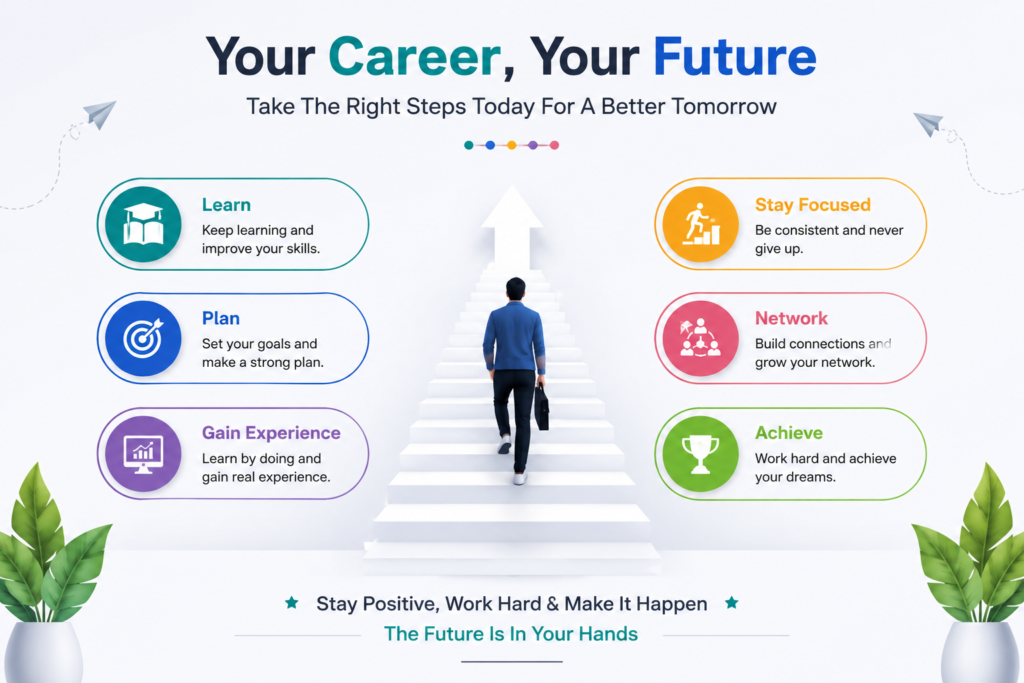
Build Your Future with the Right Skills
Your professional journey starts with learning, practice, and continuous improvement. Explore your interests, develop valuable skills, gain practical experience, and take confident steps toward a successful future.
Build Your Future with the Right Skills
Education, skills, experience, and continuous learning can help you move toward a successful professional future. Start today, keep learning, and make every step count.
Option 1
Take the First Step Toward Your Future
Learn new skills, gain experience, and keep improving to create a strong professional future.
Option 2
Learn Today, Grow Tomorrow
Develop your skills, explore new fields, and prepare yourself for exciting professional possibilities.
Option 3
Turn Your Skills Into Success
With continuous learning, practical experience, and dedication, you can build a strong foundation for your future.
Option 4
Shape Your Professional Future
Discover your strengths, develop valuable skills, and take meaningful steps toward your goals.
Option 5
Your Future Starts With Learning
Every new skill and experience can help you move closer to your professional goals.
👉 Meri favorite: “Learn Today, Grow Tomorrow” — short, attractive aur image ke ne
Option 6
Explore Your Potential
Discover your strengths, improve your abilities, and prepare for new professional possibilities.
Option 7
Create a Better Professional Future
Set meaningful goals, gain practical experience, and continue learning to move forward.
Option 8
Skills Today, Success Tomorrow
Building useful skills and gaining experience can create a strong foundation for future growth.
Option 9
Discover. Learn. Grow. Succeed.
Explore different fields, develop your abilities, and take confident steps toward your goals.
Option 10
Make Every Step Count
Every lesson, project, and experience can help you grow and prepare for your future.
Option 11
Your Skills Can Open New Doors
Keep learning, practice what you know, and stay ready for new possibilities.
Option 12
Prepare Today for a Brighter Tomorrow
Build knowledge, develop practical skills, and gain experience to become ready for the professional world.
Option 13
Build Skills, Build Your Future
Develop useful skills, gain practical experience, and keep learning for a successful professional journey.
Option 14
Turn Your Dreams Into Goals
Set clear goals, take practical steps, and continue learning to create new possibilities for your future.
Option 15
A Better Future Begins With You
Believe in your abilities, discover your strengths, and keep working toward your professional goals.
Option 16
Grow Your Skills, Expand Your Possibilities
Learning new skills can help you explore different fields and prepare for future professional opportunities.
Option 17
Step Forward With Confidence
Prepare yourself with knowledge, practical skills, and experience to face the professional world.
Option 18
Learn, Practice, and Move Forward
Consistent learning and practical experience can help you build a strong foundation for your future.
Option 19
Explore. Prepare. Achieve.
Discover your interests, develop your skills, and take meaningful steps toward your goals.
Option 20
The Future Belongs to Those Who Keep Learning
Stay curious, improve your skills, and remain prepared for the changing professional world.
Build Skills, Build Your Future
Develop useful skills, gain practical experience, and keep learning for a successful professional journey.
Add FAQ Section
Frequently Asked Questions About Career Opportunities
What are career opportunities?
Career opportunities are different professional paths and job options available to people based on their education, skills, interests, and experience.
How can students prepare for their future careers?
Students can prepare by developing useful skills, completing projects, gaining practical experience, and building a professional portfolio.
Why are professional skills important?
Professional skills such as communication, teamwork, problem-solving, and adaptability can help individuals perform effectively in different workplaces.
How can I choose the right career path?
Consider your interests, strengths, skills, educational background, and long-term goals before choosing a professional direction. Digital Marketing Services